
Few figures in modern history are as intriguing, paradoxical, and polarizing as Aleister Crowley. Both revered and reviled, he earned the nickname “the Great Beast 666” and has often been branded as “the wickedest man in the world.” Yet beyond the sensationalist headlines lies an intellectual, poet, magician, and prolific writer who left behind a vast body of work that continues to influence occult studies, mysticism, and even popular culture today.
This blog will explore Aleister Crowley’s fascinating biography, highlight his most important books and best sellers, and discuss how his writings shaped 20th-century occult movements and mystical traditions.
Early Life and the Making of a Magician
Aleister Crowley was born Edward Alexander Crowley on October 12, 1875, in Royal Leamington Spa, England. Raised in a strict Christian fundamentalist household under the influence of the Plymouth Brethren, young Edward often rebelled against the puritanical lifestyle forced upon him. This rebellion sowed the seeds for his later embrace of libertinism and esoteric exploration.
After attending Cambridge University, where he cultivated interests in literature, poetry, and mountaineering, Crowley’s life took a sharp turn when he discovered the Hermetic Order of the Golden Dawn in the late 1890s. This secretive mystical society, whose members included luminaries like W.B. Yeats introduced him to ceremonial magic, alchemy, Kabbalah, and astrology. His intense ambition and disputes with other members, however, soon led to turbulence within the Order.
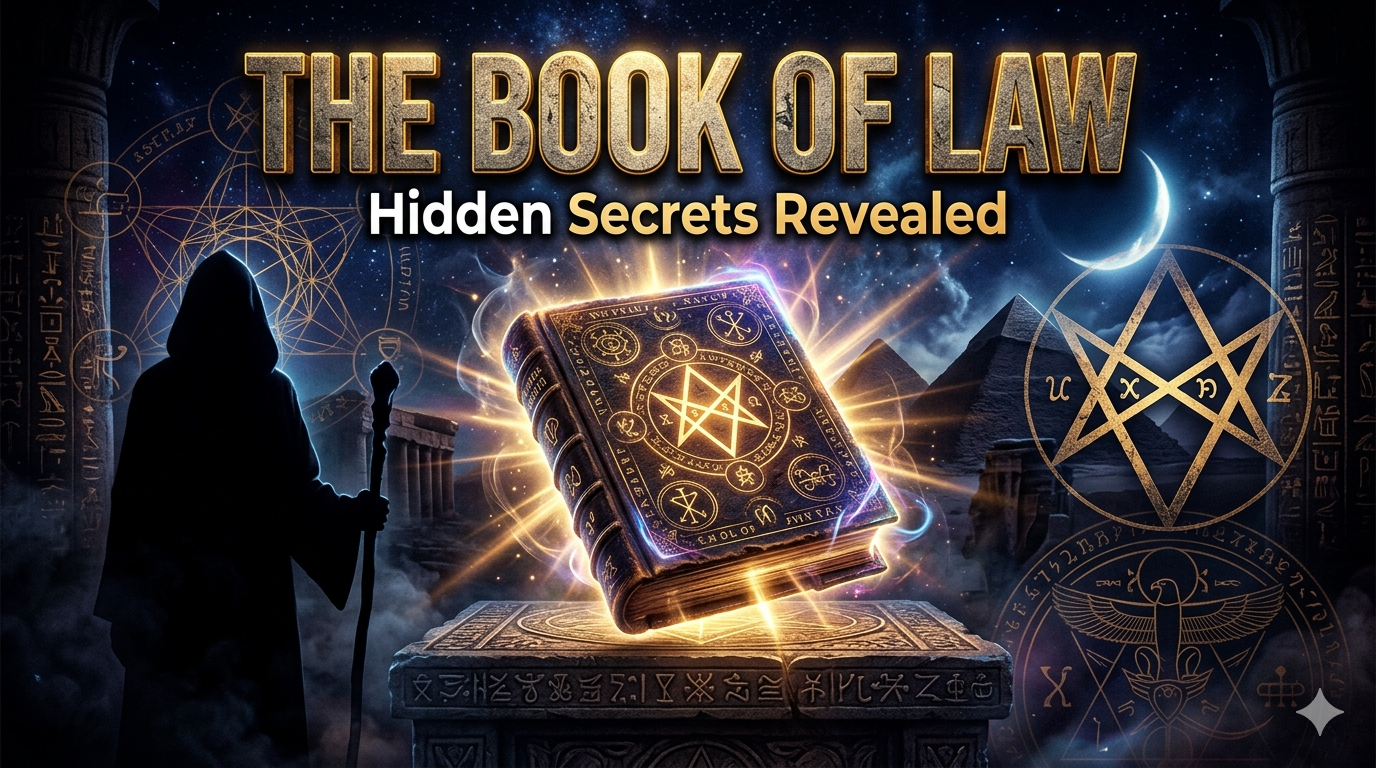
Crowley’s spiritual quest eventually led him to mystical experiences in Egypt, India, and beyond. By 1904, during a sojourn in Cairo with his wife Rose Kelly, Crowley claimed to have received a communication from a nonhuman intelligence called Aiwass. The messages dictated to him became The Book of the Law (Liber AL vel Legis)—his most important “channeled” text and the foundation of his spiritual philosophy known as Thelema.
The Philosophy of Thelema
Central to Crowley’s teachings is the Thelemic dictum: “Do what thou wilt shall be the whole of the Law. Love is the law, love under will.” Contrary to its popular misinterpretation as hedonistic anarchy, Thelema was a spiritual system emphasizing discovery of one’s True Will—the unique life path or higher purpose meant to be followed in harmony with universal forces.
This radical proclamation of spiritual individualism placed Crowley at odds with mainstream religious orthodoxy. Yet for many seekers, it was a liberating call towards authenticity, mystical exploration, and personal responsibility. His books became the primary medium for sharing these ideas with the world.
Best Seller Works of Aleister Crowley
Crowley wrote over 70 published works spanning poetry, prose, philosophy, and esotericism. Some were intended for a general audience, while others remained dense initiatory texts suited only for advanced occult students. Among his most influential and widely read books are:
The Book of the Law (Liber AL vel Legis)

Dictated in Cairo in 1904, The Book of the Law stands as the cornerstone of Crowley’s spiritual philosophy, Thelema. Written in a cryptic yet poetic style, it challenges readers to uncover their “True Will” and live in alignment with it. While often surrounded by controversy, this work remains Crowley’s most influential and enduring text, shaping modern occult thought for generations.
Magick in Theory and Practice

Magick in Theory and Practice is perhaps Crowley’s most practical and accessible manual on ceremonial magic. In this book, he outlines the philosophy, rituals, and disciplines of his system in a way that makes his esoteric teachings more approachable. It remains widely studied by those intrigued by the occult and continues to serve as a foundational guide for students of ceremonial magic.
The Book of Thoth
Crowley’s exploration of tarot symbolism, accompanied by the Thoth Tarot deck designed with Lady Frieda Harris, has become one of the most influential modern tarot interpretations. Both book and deck are cherished by occult and tarot readers worldwide.
777 and Other Qabalistic Writings

A dense but invaluable compilation of mystical correspondences, 777 draws on Kabbalah, astrology, and magic to map connections between symbolic systems. This work demonstrates Crowley’s deep engagement with esoteric traditions and remains a vital reference for students and practitioners of occult studies.
Confessions of Aleister Crowley
His monumental memoir attempts to narrate his life, philosophy, and magical development. Equal parts autobiography and manifesto, it offers valuable context for understanding his works.Diary of a Drug Fiend

Crowley’s first published novel, Diary of a Drug Fiend, is both sensational and semi-autobiographical. It explores themes of addiction, excess, and redemption through the lens of magic. Scandalous in its time, the novel not only reflected Crowley’s controversial lifestyle but also cemented his reputation as a daring modernist voice in early 20th-century literature.
Crowley’s Influence on Occult and Mysticism
Aleister Crowley’s writings inspired, troubled, and perplexed audiences for over a century. His work contributed significantly to several fields:
Occult Movements: Crowley’s teachings reshaped ceremonial magic for the modern era. Thelema influenced later magical orders such as the Ordo Templi Orientis (OTO) and the A∴A∴, both preserving his teachings and rituals.
Western Mysticism: His integration of Eastern philosophy, yoga, Tantra, and meditation with Western esotericism created a cross-cultural mystical synthesis ahead of its time.
Popular Culture: From rock musicians like Led Zeppelin’s Jimmy Page and The Beatles (who featured his image on the Sgt. Pepper’s Lonely Hearts Club Band cover) to film, literature, and contemporary mystics, Crowley’s persona left indelible marks on modern culture.
Psychological Exploration: His writings anticipated psychological ideas about individuation and self-realization, resonating with modern seekers who viewed magic and mysticism as paths of inner transformation.
Controversies and Misunderstandings
Crowley’s legacy is inseparable from the scandals surrounding him. His openness about sexuality, experimentation with drugs, and rejection of conventional morality earned him the reputation of a dangerous heretic. Sensationalist British tabloids labeled him “the wickedest man in the world.” While these stories often exaggerated his transgressions, they cemented his place in cultural mythology as both a prophet and a villain.
At the same time, Crowley’s notorious image pushed many away from engaging with his ideas seriously. Critics dismissed his writings as self-indulgent or incoherent, while supporters praised him as a prophet of a new age.
Why Aleister Crowley’s Books Still Matter
Despite controversy, Crowley’s books continue to attract new readers worldwide for several reasons:
They offer a pioneering synthesis of mysticism, philosophy, and Western ceremonial magic.
His bold vision of individual freedom and personal truth resonates strongly with modern seekers disenchanted with rigid religious dogma.
Works like Magick in Theory and Practice and The Book of Thoth remain practical guides for those exploring tarot, ritual magic, and esotericism.
Even his scandalous persona embodies the archetype of the artist-mystic who disregards convention in pursuit of higher knowledge.
In a time where interest in spirituality, alternative wisdom, and personal freedom grows ever stronger, Crowley’s writings continue to find relevance.
Conclusion
Aleister Crowley was more than the myths that surrounded him. He was a poet, philosopher, and dedicated mystic whose prolific writing left behind a treasure trove of esoteric knowledge. His biography is a tale of rebellion, visionary insight, and controversy. His best-selling books offer both inspiration and instruction for those seeking to understand occult traditions. And his influence whether through Thelema, the tarot, or echoes in popular culture remains undeniable.
For some, Crowley is a dangerous iconoclast; for others, a prophet of spiritual liberation. Either way, his books endure as a gateway into one of the most fascinating intellectual and mystical movements of the 20th century. To read Aleister Crowley is not simply to study magic, but also to engage with a radical reimagining of human freedom, will, and destiny

Write a comment ...